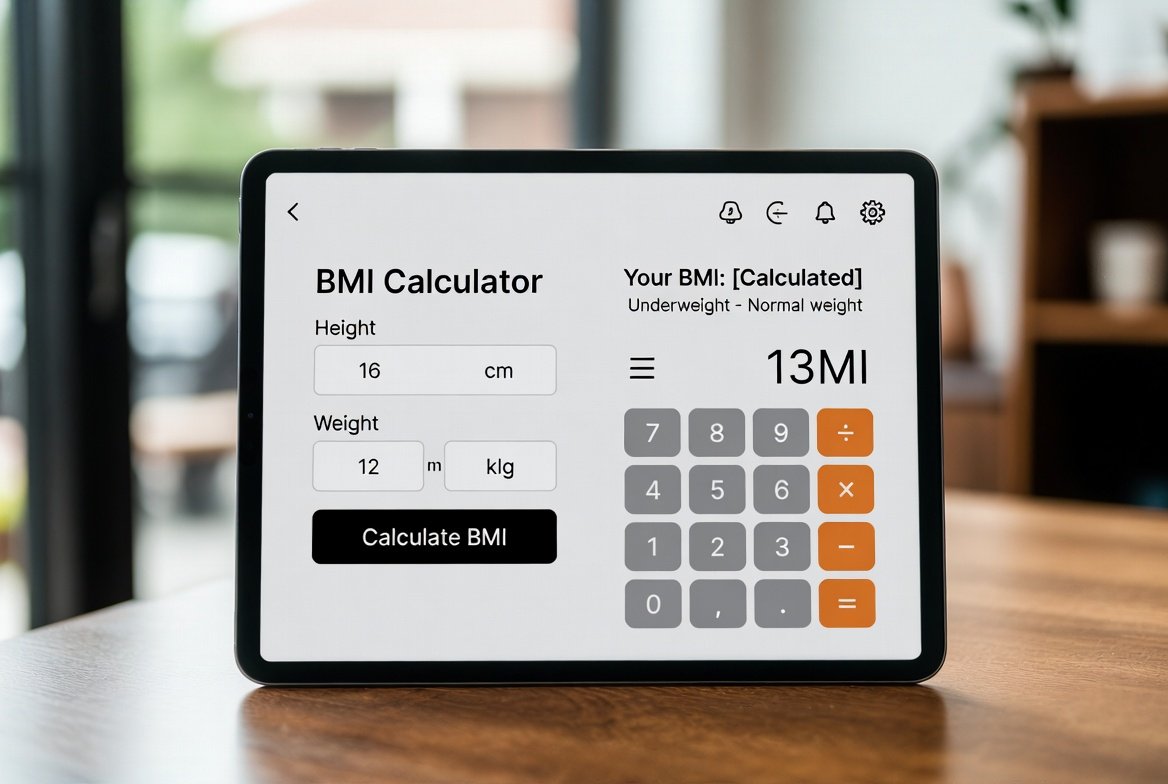
We’ve all had those moments where curiosity strikes and we find ourselves typing “What is my BMI?” into a search bar. Maybe it’s after a holiday vacation where you had a lot of high-calorie meals, or simply because a doctor mentioned the term in passing. Whatever the reason, people often look to a BMI calculator online to get a quick sense of where they stand.
The purpose of the Body Mass Index, or BMI, is to relate two basic metrics, height and weight, to a comprehensive health picture. It provides a quick, all-purpose metric that is applicable to practically everyone, including professionals, retirees, and students.
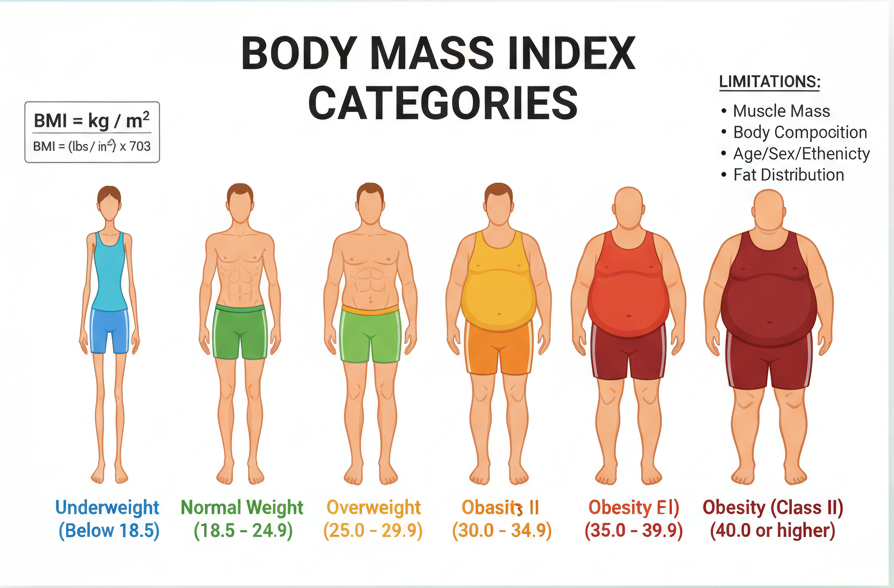
Naturally, BMI is not a perfect metric. It is still one of the most widely used and accessible screening tools, but it doesn’t reveal all the information about health, such as muscle mass or fat distribution. That’s where calculators come in, turning raw data into quick, meaningful results without the need for complicated math.
Table of Contents
- Understanding the BMI Scale
- Why Use a BMI Calculator Online?
- Men vs. Women: Gender-Specific Insights
- The Role of Age in BMI Calculations
- Practical Everyday Uses
- Conclusion
- FAQs
Understanding the BMI Scale
BMI is a straightforward formula: weight divided by height squared. While the math might sound clinical, the idea is simple. For adults, the BMI scale is typically divided into four broad categories: underweight (below 18.5), normal weight (18.5 to 24.9), overweight (25 to 29.9), and obese (30 and above).
Example: Imagine someone who weighs 70 kilograms and stands 1.75 meters tall. Using the formula, their BMI works out to about 22.9, placing them comfortably in the “normal” range. That single number immediately communicates more context than weight alone could provide.
What makes the BMI scale powerful is its universality. It allows health professionals, researchers, and individuals alike to compare results across different groups and populations quickly. Instead of memorizing cutoff points or doing manual calculations, an online calculator turns the process into a few keystrokes. Within seconds, you can see not only your BMI but also where it falls on the scale, making the information far more accessible.
Why Use a BMI Calculator Online?
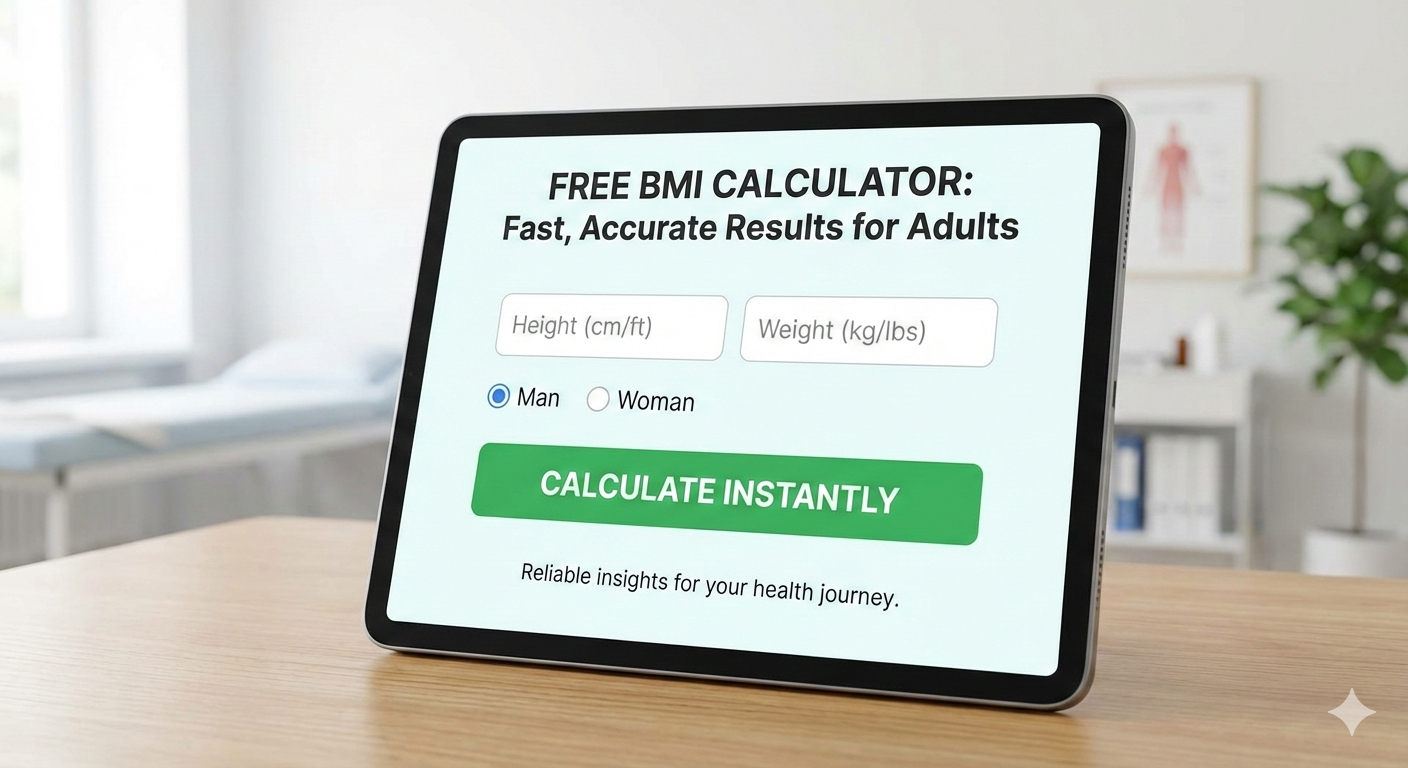
The purpose of using a BMI calculator online is clear: it removes the need for math and instantly provides results. You enter your height and weight, and in seconds, the calculator delivers your BMI along with the corresponding category on the BMI scale. For many, this is far less intimidating than trying to work through the formula on paper.
Online calculators are also accessible from anywhere, at home, at work, or even on a smartphone at the gym. Many come with specialized features that make them more than just basic tools. A BMI calculator that uses metric measurements caters to those who use metric measurements, while a BMI calculator with age adjusts the interpretation for children, teens, or older adults. Similarly, a female BMI calculator can account for differences in body composition between men and women.
These calculators are quicker, simpler, and frequently more accurate than traditional charts. Instead of manually comparing numbers, you get an instant conclusion based on your inputs. Online BMI calculators are the preferred choice for anyone seeking a quick health snapshot without the hassle because of their convenience.
Men vs. Women: Gender-Specific Insights
One of the reasons BMI is often debated is that men and women naturally carry weight differently. Men tend to have more muscle mass, while women generally have higher body fat percentages, even at the same BMI. This means that a score of 24 might represent something slightly different depending on gender.
That’s why tools like a BMI calculator for women or a female BMI calculator can provide better context. These calculators don’t change the underlying formula but often frame the results in more relevant ways. For instance, a woman with a BMI of 23 may be ideally within the healthy range, but understanding how female physiology interacts with weight distribution makes the number more meaningful.
Consider this example: A male athlete and a female office worker could both have a BMI of 26. On paper, that places them in the “overweight” category. However, the athlete’s higher muscle mass might mean he has very little excess fat, while the office worker may indeed be carrying more fat tissue.
This illustrates why BMI should always be seen as a guideline rather than a verdict. A calculator gives you a number, but interpreting that number requires context, especially when it comes to gender differences.
The Role of Age in BMI Calculations
Age plays a major role in how BMI is interpreted, which is why relying on a BMI calculator with age is often more accurate than using a single, one-size-fits-all number. For children and teenagers, BMI is not judged against fixed cutoffs but percentiles. A 13-year-old boy with a BMI of 20, for instance, might be considered healthy in relation to peers of the same age and sex, whereas for an adult, that same number would fall squarely in the “normal” range.
For adults, the standard BMI scale applies consistently across men and women, generally from ages 20 to around 65. Here, BMI categories of underweight, normal, overweight, and obese provide a reliable framework for quick health assessments.
Older adults, however, face a slightly different picture. As people age, they tend to lose muscle mass and bone density while gaining fat in different areas of the body. In these cases, a BMI that leans slightly higher may still be associated with good health. A tailored calculator that factors in age helps account for these nuances, giving a clearer picture of where someone truly stands on the health spectrum.
Practical Everyday Uses
The beauty of a BMI calculator online is its flexibility in everyday life. Many people use it at home before a doctor’s appointment, giving them a baseline idea of where they fall on the BMI scale. Others use it to track progress while working on lifestyle changes, such as weight loss or strength training. A person beginning a new exercise, for instance, might check their BMI once a month to see if he is getting closer to a healthier range.
It also helps in establishing reasonable objectives. By using a BMI calculator, people can target the healthier categories instead of aiming for an undefined “ideal weight,” keeping expectations based on accepted medical standards. Not only that, but anyone, anywhere, can access the information because calculators are freely available online in formats like a women’s BMI calculator or a BMI calculator in kilograms. Because of its simplicity of use, BMI is transformed from a theoretical medical formula into a useful tool that promotes everyday health awareness.
Conclusion
At the end of the day, BMI calculators are about more than just crunching numbers. They transform simple inputs, height and weight, into meaningful health insights that can guide decisions and spark awareness. Whether you’re checking your results with a BMI calculator online, using a BMI calculator kg for metric accuracy, or exploring how age and gender affect your outcome, these tools provide clarity in seconds.
Of course, BMI is not the complete story of health. It doesn’t capture muscle mass, lifestyle, or genetic differences. But as an accessible first step, it empowers people to ask better questions and make informed choices. When used wisely, BMI is less about the number itself and more about what that number encourages you to do next.
FAQs
Is an online BMI calculator accurate?
Yes, most are accurate for the formula itself. The interpretation, however, may vary depending on age, gender, and body composition.
Do I need a different calculator for men and women?
The formula is the same, but a female BMI calculator and a BMI calculator for men can frame results with gender-specific context.
Can BMI calculators adjust for age?
Yes, a BMI calculator with age is especially useful for children, teens, and older adults, where standard cutoffs may not apply.
What’s the advantage of a BMI calculator in kg/cm?
A BMI calculator kg is designed for metric users, making it easier to input height and weight without conversions.
Is the BMI scale the same worldwide?
The categories are generally consistent, though some countries adopt slightly modified cutoffs based on population health trends.