“How old are you?” or “How old am I?” are tiny questions with big consequences. Exact age matters for everything from filling out government forms and applying for school to meeting sports eligibility rules, scheduling medical screenings, and planning retirement. A small mistake, guessing your age or rounding to the nearest year, can delay applications, disqualify a child from a team, or misalign a vaccination schedule.
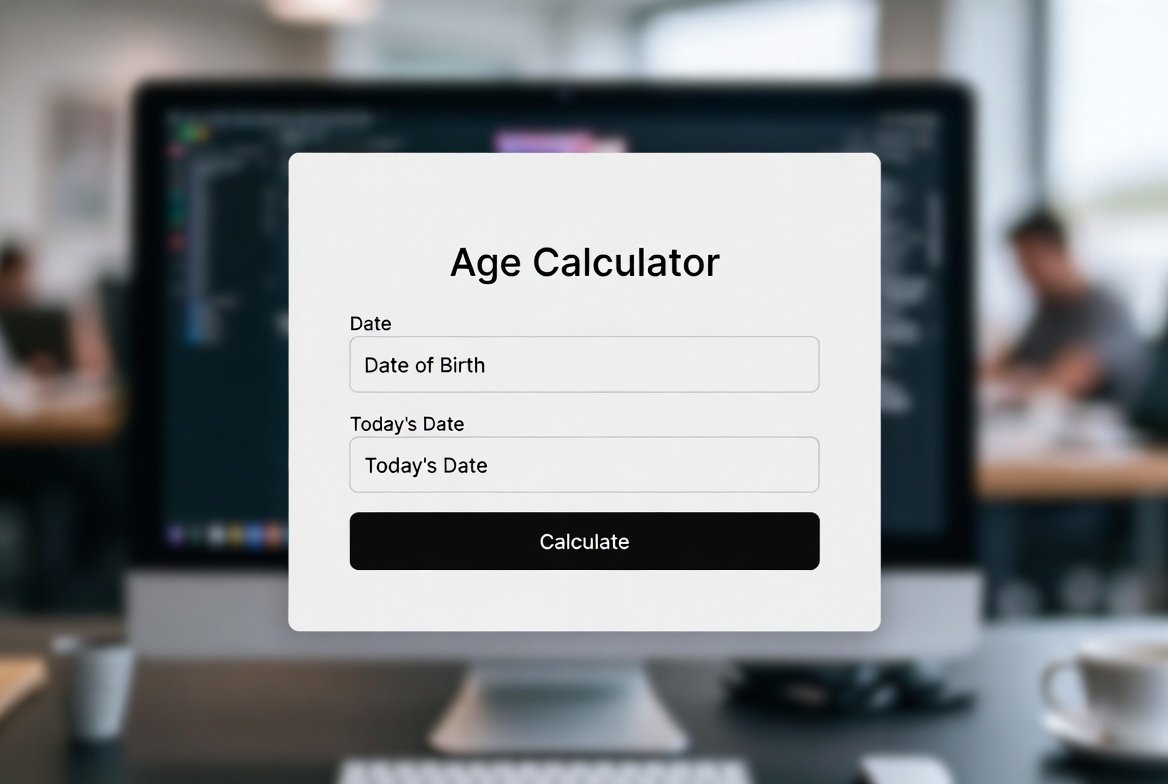
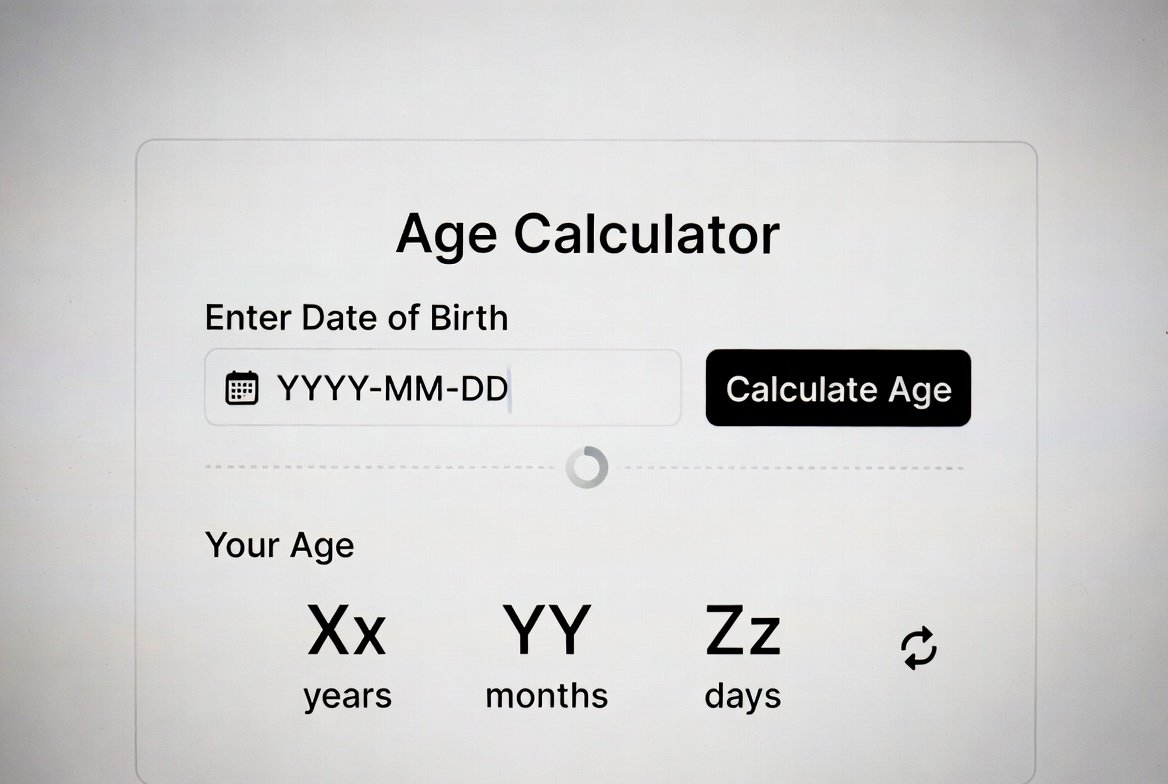
An age calculator (also known as a chronological age calculator) eliminates all the guesswork. Enter a birthdate and the tool instantly returns your precise age in years, months, and days, and many calculators add hours, minutes, total days lived, or an upcoming birthday countdown. It’s the fastest and most reliable way to determine how old I am for everyday needs and official purposes. Use the calculator whenever you need accuracy, documentation-ready numbers, or a quick way to settle the perennial “how old are you?” question.
- Years, months, days (e.g., 34 years, 2 months, 5 days) — the standard chronological age
- Total days lived (useful for scientific, medical, or legal purposes)
- Age in months (handy for infants and preschool enrollment)
- Age in hours/minutes/seconds (novelty or precise logging)
- Countdown to next birthday or age on a future date (planning tools)
To be accurate, a solid age calculator handles calendar quirks: leap years (February 29), months with 28/30/31 days, and time zone differences if birth time matters. Common use cases include school admissions, immigration and visa forms, youth sports eligibility, medical records and vaccination schedules, ID renewals, and simple birthday curiosity.
Compared with manual math, an age calculator is faster, more dependable, and less likely to produce errors when a precise answer is required.
2. Chronological Age vs. Other Age Types
Chronological age is the straightforward measure of how much calendar time has passed since your birth, expressed in years, months, and days. It’s the most widely used age metric and the one institutions rely on for legal and administrative decisions.
Other age concepts exist, but they serve different purposes:
- Biological age estimates how “old” your body is based on biomarkers and health indicators. Two people with the same chronological age can have very different biological ages.
- Developmental or mental age refers to where a person stands relative to typical cognitive or social milestones — used in education and psychology.
- Perceived age is how old someone looks or feels, subjective and not used for official records.
Organizations prefer chronological age for its objectivity and legal clarity. Schools use chronological age to enforce enrollment cutoffs; health providers use it for age-specific screenings and vaccine schedules; benefits programs use it to establish eligibility dates.
When a form asks “date of birth” or “age,” it virtually always expects your chronological age, the precise output a chronological age calculator provides.
3. How the Age Calculator Works
The mechanics behind an age calculator are simple but meticulous. Here’s how the tool computes your exact age:
- User input: You enter your birthdate (and optionally birth time and time zone) and in many calculators, a target date (default: today).
- Year–month–day subtraction: The calculator subtracts birth year from target year, then handles months and days with borrowing logic similar to manual subtraction (because months have uneven lengths).
- Leap year adjustments: If your timeframe crosses leap days (Feb 29), the algorithm counts those extra days in total-days outputs so the age is exact.
- Month-length handling: Months vary (28–31 days); the tool borrows a month’s days when the current day is less than the birth day and adjusts accordingly.
- Time zones (optional): When birth time matters for legal or astrological reasons, the calculator may factor time zone offsets to decide the exact day boundary.
Multiple outputs: The final result can be shown as years/months/days, total days lived, age in months, or even hours and seconds. Many calculators also display a countdown to the next birthday or compute age on a future date.
4. How to Calculate Age Manually (With Examples)
If you prefer to verify results or understand the arithmetic, you can compute age manually with careful year–month–day subtraction:
Basic formula:
Age=Current Date−Birthdate\text{Age} = \text{Current Date} - \text{Birthdate}Age=Current Date−Birthdate
Perform the subtraction in years, months, and days, borrowing when necessary.
4.1. Example 1: Birthday already passed this year
- Birthdate: May 15, 1995
- Today: March 10, 2025
- Years: 2025−1995=302025 – 1995 = 302025−1995=30. Since March (3) is before May (5), subtract 1 → 29 years.
- Months: Borrow: 3+12−5=103 + 12 – 5 = 103+12−5=10. Because we already subtracted 1 year, months = 9 months (after accounting for the borrow).
- Days: Today’s day (10) < birth day (15), so borrow from the previous month (Feb 2025 has 28 days): days = 10+28−15=2310 + 28 – 15 = 2310+28−15=23.
Result: 29 years, 9 months, 23 days.
4.2. Example 2: Birthday not yet reached this year
- Birthdate: December 2, 2000
- Today: June 1, 2025
- Years: 2025−2000=252025 – 2000 = 252025−2000=25. June is before December → subtract 1 → 24 years.
- Months: 6+12−12=66 + 12 – 12 = 66+12−12=6; subtract 1 if needed because day 1 < day 2 → 5 months.
- Days: Borrow from May (31 days): 1+31−2=301 + 31 – 2 = 301+31−2=30 days.
Result: 24 years, 5 months, 30 days.
4.3. Example 3: Age in months & total months lived
Convert years to months: total months = years × 12 + months. From Example 1: 29×12+9=35729×12 + 9 = 35729×12+9=357 months. Calculating total days manually is tedious; tools do this instantly and avoid off-by-one errors with leap years.
These examples show how easy it is to slip up with manual math; an age calculator eliminates that risk.
5. Common Situations Where People Ask “How Old Are You?”
People need their exact age for many everyday and official reasons:
- Legal documents: Passports, driver’s licenses, and visa applications require exact dates and sometimes an exact age in years and days.
- School placement: Enrollment cutoffs and preschool/kindergarten eligibility often depend on whether a child is a certain age by a specified date.
- Sports team eligibility: Youth leagues and competitions use strict age brackets; being a day too old or too young can change eligibility.
- Medical checkups: Vaccination schedules, developmental milestones, and age-based screenings use months/days precision, especially for infants and children.
- Senior benefits: Retirement plans, pension eligibility, and Social Security depend on precise birthdates to determine when benefits begin.
- Job applications: Some positions require minimum age verification; background checks and onboarding forms request exact DOB-derived ages.
- Travel visas & immigration: Visa categories and entry rules often hinge on age at a specific date.
Astrology & genealogy: Some people want the exact age for charts or family records.
6. Popular Age Questions People Search For
People type lots of specific queries into search bars, and an age calculator answers them instantly. Here are common questions and how the tool solves each:
- How old are you if you were born in 1995?: The calculator subtracts the birth year from today’s year and adjusts for whether your birthday has passed this year to return an exact age in years (and months/days if you want precision).
- How old am I today?: Enter your full birthdate and get your precise chronological age right now (Y/M/D).
- How old will I be on my next birthday?: The tool shows the countdown to your next birthday and the age you’ll turn on that date.
- How old are you in months/days?: For infants and medical use, the calculator returns total months and exact days lived.
- How old am I on a specific future date?: Enter any target date (e.g., a wedding, graduation, or retirement start) and instantly compute your age on that day.
These queries may sound different, but they’re the same calendar math under the hood, handled reliably by the calculator so you never have to guess or do error-prone manual subtraction.
7. Conclusion
Exact age matters for forms, school cutoffs, medical schedules, and life planning. Instead of rounding or guessing “how old am I,” use a reliable chronological age calculator to get precise years, months, and days (or total days/hours) in seconds. It’s fast, removes human error, and gives the documented numbers you need for official and personal use. Ready to stop wondering? Enter your birthdate now and calculate your age instantly.
8. FAQ
Q: How do I find my exact age?
A: Enter your full birthdate (year, month, day) into the age calculator. It uses calendar subtraction (with leap years and month lengths) to return years, months, and days, and optionally total days or hours lived.
Q: What is chronological age?
A: Chronological age is the elapsed time since birth measured on the calendar. It’s the legal and administrative age used for passports, school cutoffs, and many medical guidelines.
Q: How old are you if you’re born on leap day (Feb 29)?
A: Chronological age still increases annually even if your birthday date appears only every four years. The calculator counts all intervening days; in non-leap years, many jurisdictions treat Feb 28 or Mar 1 as the legal birthday for some purposes, but the chronological age (years passed) increments normally.
Q: Can I calculate my age in days?
A: Yes. The calculator can return total days lived (it counts leap days properly), which is helpful for scientific records, pediatrics, or exact milestone tracking.
Q: How do I calculate age for a future date?
A: Enter your birthdate and set the target date in the tool. It will compute your age on that future date (useful for planning events or retirement timelines).
Q: Why does my age show differently in some calculators?
A: Differences arise from time-zone handling, whether the tool counts the birth day as day zero or day one, or rounding conventions. Use a reputable calculator that states its conventions.
Q: Can an age calculator be used for legal purposes?
A: An age calculator provides a precise chronological age for informal checks. For legal or official processes, provide your birth certificate or government ID; the calculator is a fast verification step, but not a legal document.