Understanding your Body Mass Index (BMI) is a quick way to gauge where your weight falls relative to your height, and why so many people use a body mass index calculator every day. BMI is not a verdict on your health, but it’s a widely accepted screening tool that flags whether you might be at higher risk for conditions such as type 2 diabetes, heart disease, or low bone density.
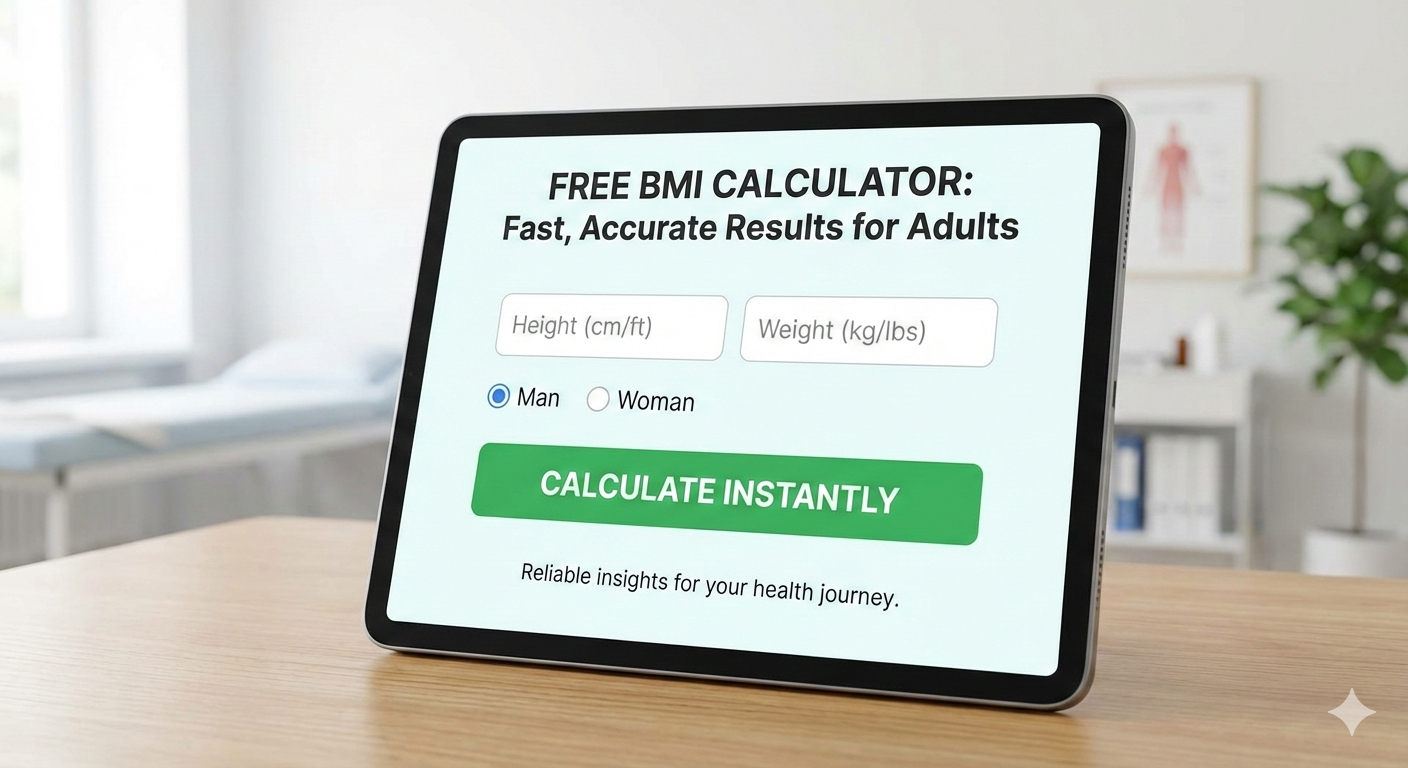
A reliable BMI calculator does the heavy lifting for you: enter height and weight, pick metric or imperial units, and get an instant BMI number and category. That immediate feedback helps you decide whether to talk to a clinician, track trends, or set realistic fitness goals. In short, knowing what your BMI means gives you a fast, standardized starting point for healthier choices, without replacing medical advice.
What Is BMI?
Body Mass Index (BMI) is a simple numeric measure that relates weight to height. It was developed to provide an easy-to-compare index for population studies and clinical screening. BMI is calculated using one of two equivalent formulas:
Metric: BMI=weight (kg)height (m)2\text{BMI} = \frac{\text{weight (kg)}}{\text{height (m)}^2}BMI=height (m)2weight (kg)
Imperial: BMI=weight (lb)height (in)2×703\text{BMI} = \frac{\text{weight (lb)}}{\text{height (in)}^2} \times 703BMI=height (in)2weight (lb)×703
The result, typically shown to one decimal place, is used to categorize individuals into standard weight ranges. Significantly, BMI was developed as a screening tool rather than a diagnostic test: it identifies people who may benefit from further assessment, such as waist circumference, body fat percentage, or metabolic testing.
What BMI doesn’t measure is crucial: it doesn’t distinguish between muscle and fat, it says nothing about where fat is stored on the body (central vs. peripheral), and it doesn’t capture fitness, diet quality, or metabolic health directly. Because of these limits, BMI is best used as a first step — a consistent yardstick for comparing weights across people and over time.
How the Body Mass Index Calculator Works
A body mass index calculator automates the formula above and avoids the unit-conversion errors that trip up manual calculations. Here’s the straightforward workflow:
- Inputs: You enter your height and weight. Most calculators accept either metric (kg and cm/m) or imperial units (lb and ft/in). Some tools also let you enter age and sex for context notes, although these are not part of the BMI formula itself.
- Unit handling: If you use imperial units, the calculator internally converts them (height in inches, weight in pounds) and applies the ×703 factor; for metric units, it converts kilograms to meters per second squared.
- Computation: The calculator computes BMI to the specified precision (1 or 2 decimal places).
- Category mapping: It maps your BMI to standard categories (underweight, normal, overweight, obesity) and displays explanatory text and next-step suggestions.
- Optional outputs: Many calculators display additional outputs, such as ideal weight ranges, waist-to-height ratios, and quick tips for men and women.
BMI Categories and What They Mean for Your Health
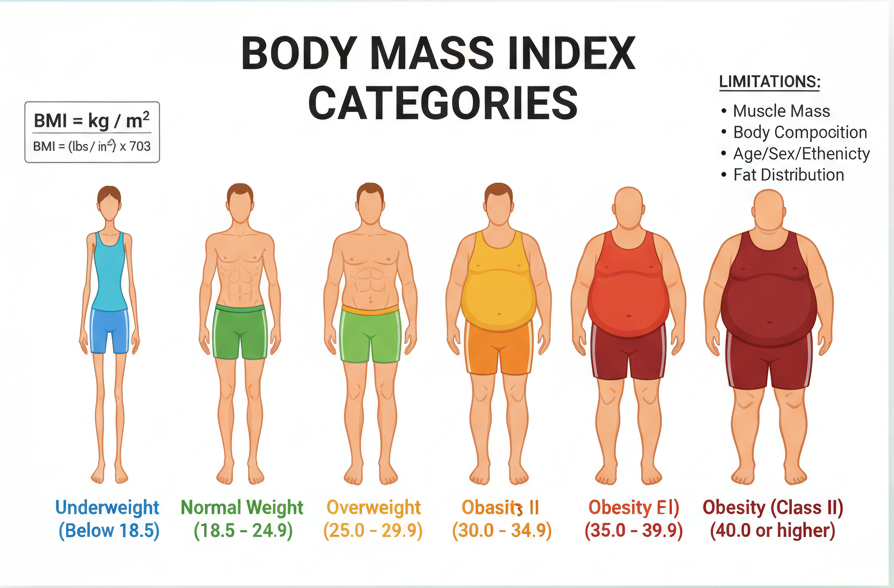
Health organizations use the exact BMI cutoffs for adults, making BMI a consistent screening language across clinics and studies. Here are the World Health Organization–style categories and what they typically imply for health risk:
- Underweight (BMI < 18.5): Possible concerns: nutrient deficiencies, decreased immune function, low bone density, and, in severe cases, increased mortality risk. Underweight people may need evaluation for eating disorders, malabsorption, or chronic illness.
- Normal weight (BMI 18.5–24.9): Generally associated with the lowest population-level risk for many chronic diseases. This range is a common target for public health messaging, though individual health varies.
- Overweight (BMI 25.0–29.9): Associated with an increased risk of hypertension, type 2 diabetes, dyslipidemia, and some cancers. Lifestyle interventions (diet, activity) are often recommended to prevent progression.
- Obesity class I (BMI 30.0–34.9): Increased cardiometabolic risk is often a point where clinicians discuss structured weight-management strategies.
- Obesity class II (BMI 35.0–39.9): Higher risk of comorbidities; medical evaluation and possible interventions (behavioral, pharmacologic) may be warranted.
- Obesity class III (BMI ≥ 40.0): Severe obesity with substantially elevated risks for heart disease, diabetes complications, sleep apnea, and mobility limitations; multidisciplinary care is commonly advised.
Remember: these categories apply the same numeric cutoffs for men and women, but interpretation should consider body composition and distribution. For instance, abdominal (central) adiposity is more strongly linked to metabolic risk than BMI alone indicates. Use BMI as an efficient screening tool to determine when to follow up with waist circumference, body fat testing, or blood work.
Why BMI Can Still Be Useful (Even Though It’s Not Perfect)
Despite limitations, BMI remains a practical and valuable tool for several reasons:
- Population screening power: BMI is simple to collect and compare across large groups, making it invaluable for public health studies and tracking trends over time.
- Trackable metric: For individuals, BMI lets you objectively monitor weight trends. Small, consistent changes in BMI over months reveal meaningful progress or regression.
- Guides clinical decisions: Clinicians often use BMI as a first-line screening to decide whether to order additional tests (cholesterol, glucose) or refer to nutrition and lifestyle programs.
- Accessible and standardized: No special equipment is required, just a scale and measuring tape, making a BMI calculator valuable in low-resource settings and routine checkups.
- Action trigger: A BMI outside the normal range prompts constructive conversations about diet, activity, and preventive care that might otherwise be delayed.
In short, BMI is not a perfect proxy for individual health, but it is a fast, standardized starting point that helps both clinicians and individuals decide when deeper assessment is needed. Use your body mass index calculator to get a clear, immediate picture, then pair that insight with waist measures, fitness metrics, and medical advice to understand what your BMI means for your health.
When BMI May Not Be Accurate
BMI is a helpful screening number, but there are several everyday situations where it can mislead:
- Athletes and highly muscular people: Muscle weighs more than fat. A bodybuilder or strength athlete may register a high BMI while having very low body fat and excellent metabolic health.
- Older adults: With age, people lose muscle (sarcopenia) and may gain fat even if their BMI stays “normal.” That can hide unhealthy body composition.
- Pregnancy: Pregnancy changes weight and body water content dramatically; BMI cutoffs don’t apply. Obstetricians use pregnancy-specific charts and guidance.
- Medical conditions and edema: Fluid retention (edema), some medications, or organ conditions can increase body weight without increasing fat, inflating BMI.
- Ethnic and regional differences: Research shows some populations (for example, certain Asian groups) face higher cardiometabolic risk at lower BMIs, leading health bodies to suggest adjusted cutoffs.
- Very short or very tall individuals: At the extremes of height, the BMI formula can distort estimates of body composition.
How to Calculate BMI Manually (With Examples)
Calculating BMI by hand is straightforward once you know the formula and unit conversions.
Metric method (preferred):
BMI=weight (kg)[height (m)]2\text{BMI} = \frac{\text{weight (kg)}}{[\text{height (m)}]^2}BMI=[height (m)]2weight (kg)
Example: 70 kg and 1.75 m → BMI = 70 ÷ (1.75² = 3.0625) = 22.86
Imperial method:
BMI=weight (lb)[height (in)]2×703\text{BMI} = \frac{\text{weight (lb)}}{[\text{height (in)}]^2} \times 703BMI=[height (in)]2weight (lb)×703
Example: 154 lb and 69 in → BMI = (154 ÷ 69² = 154 ÷ 4761 ≈ 0.03235) × 703 ≈ 22.74
Quick conversions:
- Inches → meters: multiply by 0.0254.
- Pounds → kilograms: multiply by 0.453592.
What Your BMI Means for Daily Life
Your BMI is more than a number; it can guide everyday health choices and medical conversations:
Fitness planning: Use BMI with other measures to set realistic goals. If BMI is high but you’re muscular, focus on performance metrics (strength, endurance) and body composition rather than weight loss alone. If BMI is high and waist circumference is elevated, prioritize fat-loss strategies.
Doctor visits: Clinicians use BMI as a screening tool. A BMI outside the “normal” range usually prompts questions about diet, activity, and sleep, and may lead to lab tests for blood sugar, lipids, and liver health. Bring a recent BMI reading to appointments to streamline discussions.
Weight-loss or muscle-gain goals: BMI helps set measurable targets. A gradual, sustainable change in BMI (and a muscle-preserving strategy) is preferable to crash diets that lower muscle mass.
Insurance and medical risk assessment: Insurers and health programs often use BMI to estimate risk. Higher BMI categories can affect premiums or trigger referrals to a wellness program.
Workplace wellness programs: Employers may use BMI for aggregated health metrics (not individual judgment) to design programs that promote activity and healthy eating.
Personal awareness: Regularly checking BMI (monthly or quarterly) helps you spot trends early—gain in weight, loss of muscle, or success from a new workout plan. Combine BMI with waist measurements and how you feel functionally (energy, sleep, performance) for a rounded sense of health.
Tips to Move Toward a Healthier BMI
Improving BMI safely focuses on sustainable lifestyle changes rather than quick fixes:
- Balanced eating: Prioritize whole foods, vegetables, fruits, lean proteins, legumes, whole grains, and healthy fats. Reduce sugary drinks and highly processed snacks. Aim for modest calorie changes rather than extreme restriction.
- Strength training plus cardio: Resistance training preserves or builds muscle (helpful for metabolic health), while aerobic exercise supports calorie burn and cardiovascular fitness. Aim for 150 minutes of moderate cardio per week plus two strength sessions.
- Consistent sleep & stress management: Poor sleep and chronic stress dysregulate hunger hormones and fat storage. Target 7–9 hours of quality sleep and use stress-reduction practices such as walking, breathing exercises, or journaling.
- Hydration & small habit changes: Drink water, plan meals, and use portion awareness. Small, consistent actions (walking after meals, standing breaks) add up.
Avoid extreme diets: Rapid weight loss often leads to muscle loss. Target gradual weight change (about 0.5–1% body weight per week) and consider professional guidance (registered dietitian) for personalized plans.
Conclusion
A body mass index calculator provides an immediate snapshot of where your weight stands relative to your height, a helpful first step in understanding what your BMI means for your health. While BMI is quick and standardized, it’s not the whole story: combine it with waist circumference, body composition, fitness, and professional guidance for a complete picture.
Regular checks with a reliable BMI calculator make trends visible and help you make informed, sustainable choices. Ready to learn more? Use the BMI calculator now to get your instant result and plan your next healthy step.
FAQ’s
Is BMI accurate for everyone?
No, BMI is a screening tool that can be misleading for athletes, older adults with low muscle mass, pregnant people, and some ethnic groups. Use it with other measures.
What is a healthy BMI?
For most adults, a BMI of 18.5–24.9 is considered healthy. Individual health depends on many factors beyond BMI.
What BMI is considered obese?
A BMI of 30.0 or higher indicates obesity, with higher classes (I–III) showing increasing risk.
Does BMI differ for men and women?
The numeric BMI cutoffs are the same, but men and women differ in body composition. Interpret BMI alongside waist measures and body-fat tests.
How do I lower my BMI safely?
Gradual weight loss through a balanced diet, strength training, and consistent cardio, plus sleep and stress management. Avoid crash diets.
Is BMI a good measure of health?
It’s a valuable screening tool, but not a complete health assessment. Combine BMI with waist circumference, labs, fitness, and clinician input.
Should BMI be used for medical decisions?
BMI can trigger further testing or referrals, but should not be the sole factor. Clinicians use BMI along with symptoms, labs, and body composition measures.