“How old am I?” is one of the most frequently asked and searched questions on the internet. Exact age matters in many real-life situations, such as filling out legal forms, applying for school, proving sports eligibility, scheduling vaccinations, planning retirement, or even settling a friendly debate. An age calculator answers that question precisely, not with a rounded guess, but with years, months, days, and even hours if you need them.
A chronological age calculator computes the exact time elapsed since your birthdate by accounting for leap years, varying month lengths, and date boundaries. It’s the fastest and most reliable way to determine your age today (or on any future date), whether you need a quick check for birthday posts or a precise figure for official records. Use the tool to stop wondering and start knowing: enter your birthdate and get an instant, accurate age.
Table of Contents
1. What Is an Age Calculator?
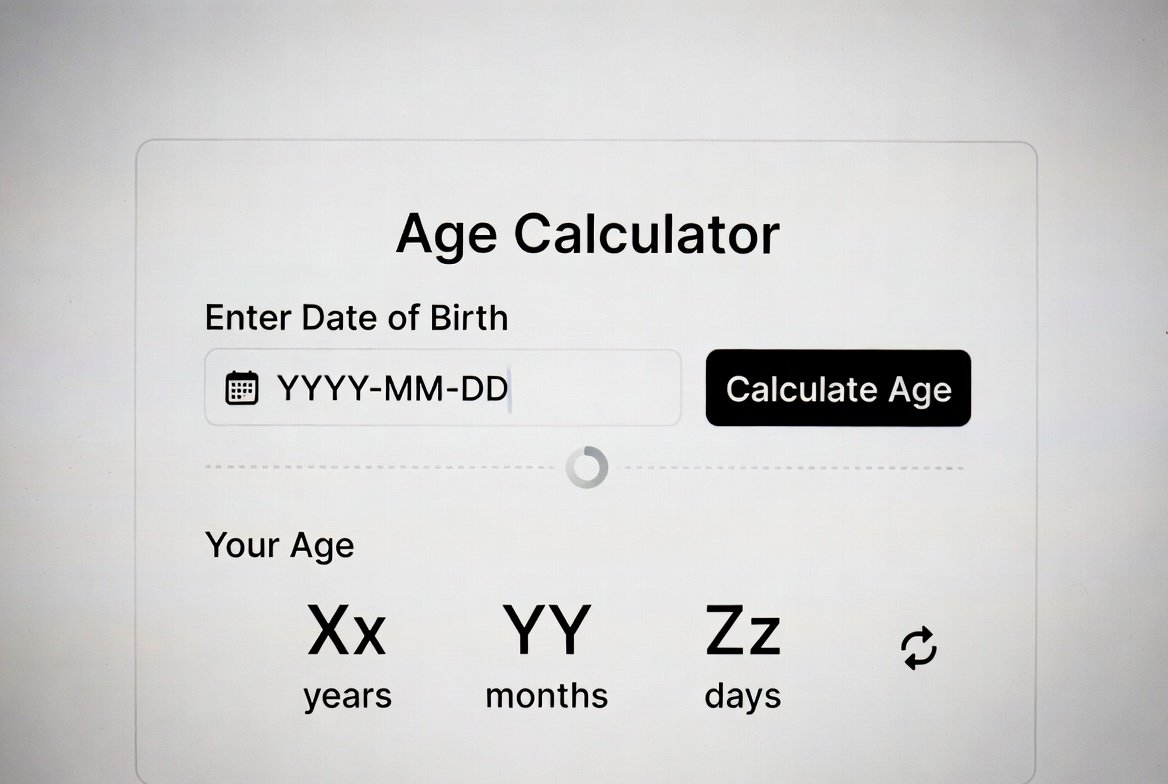
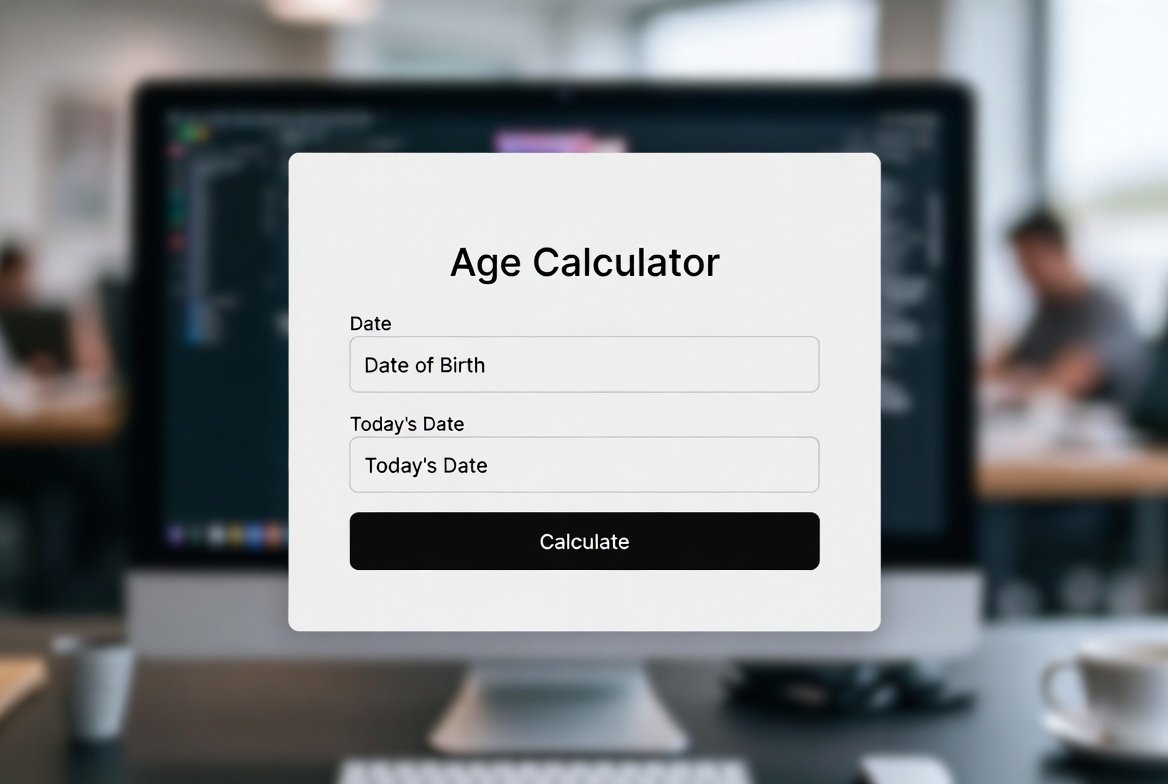
An age calculator is an online tool that converts a birthdate into an exact age relative to a target date (usually today). Unlike a casual estimate (“about 30”), it returns precise values: years, months, and days. Some calculators go further to show total days, hours, minutes, or seconds lived.
A good age calculator handles the subtle calendar rules correctly:
- Leap years (Feb 29 every four years) are included, so your age in days is exact.
- Varying month lengths (28–31 days) are accounted for when computing months and days.
- Timezone/date alignment can be considered for extreme precision when birth time matters.
Outputs typically include:
- Age in years, months, and days (e.g., 29 years, 9 months, 23 days).
- Total days lived (useful for scientific or medical records).
- Age in months (handy for pediatric milestones).
- Age in hours/minutes/seconds (advanced feature for novelty or precise logs).
2. What Is Chronological Age?
Chronological age is the straightforward measure of how much time has elapsed since a person’s birth, the years, months, and days that have passed on the calendar. It is the most widely used and legally recognized age metric: governments, schools, and medical systems rely on chronological age for eligibility, records, and protocols.
Chronological age differs from other “age” concepts:
- Biological age estimates how “old” your body is based on health markers (it can be younger or older than your chronological age).
- Mental or developmental age refers to cognitive or behavioral development relative to norms.
Why organizations use chronological age:
- Immunization schedules and pediatric checkups are set by exact ages (months/days).
- School admissions often depend on a birthday cutoff (e.g., must be 5 by a specific date).
- Benefit eligibility (senior discounts, pension ages) is determined by exact birthdates.
- Fitness and youth sports use strict age brackets to ensure fair competition.
- Clinical assessments: many tests rely on age-normed reference ranges.
A chronological age calculator gives the exact calendar-based age that these systems require. When an agency asks “How old are you?” they mean your chronological age, the one the calculator provides, not an approximation or an age rounded to the nearest year.
3. How an Age Calculator Works
An age calculator follows a precise but straightforward procedure:
- User input: enter the birthdate (and optionally birth time and time zone).
- Reference date: the calculator compares the birthdate to a target date, usually the current date.
- Year–month–day logic: it computes the elapsed time in years, then months, then days. The calculation typically:
Subtract the birth year from the current year to get a preliminary year difference.
Adjusts the year if the current month/day is before the birth month/day.
Computes the remaining months and days, borrowing a month when necessary (because months have different lengths).
Adjustments: the algorithm accounts for leap years (Feb 29) and different month lengths, so the days/months are exact.
Outputs: standard formats are:
- Y years, M months, D days (chronological age)
- Total days lived (sum of all days since birth)
- Age in months (useful for infants)
- Countdown to next birthday (handy for planning)
Example: The age calculator performs the calendar arithmetic for you, so you don’t have to manually borrow days from a prior month or guess about leap years. The result is faster and more accurate than those obtained through hand calculations.
4. How to Calculate Age Manually (With Examples)
If you want to verify a result or calculate age without a tool, use this stepwise approach:
Basic formula:
Age=Current Date−Birthdate\text{Age} = \text{Current Date} - \text{Birthdate}Age=Current Date−Birthdate
Perform the subtraction using year–month–day logic: subtract years, then months (borrowing if needed), then days (borrowing from the previous month when necessary).
4.1. Example 1: Birthday already passed this year
Birthdate: May 15, 1995
Today: March 10, 2025
Step-by-step:
Years: 2025−1995=302025 – 1995 = 302025−1995=30. Since March 10 is before May 15, subtract 1 → 29 years.
Months: compute month difference: March (3) − May (5) → −2 → add 12 → 10; but because we borrowed 1 year above, subtract 1 month → 9 months.
Days: today’s day (10) is less than birth day (15), so borrow days from the previous month (February 2025 has 28 days) → days = 10+28−15=2310 + 28 – 15 = 2310+28−15=23.
Result: 29 years, 9 months, 23 days.
4.2. Example 2: Birthday not yet reached this year
Birthdate: December 2, 2000
Today: June 1, 2025
Step-by-step:
Years: 2025−2000=252025 – 2000 = 252025−2000=25. June 1 is before Dec 2 → subtract 1 → 24 years.
Months: (June − Dec) = −6 → +12 = 6; because today’s day (1) is less than birth day (2), subtract 1 month → 5 months.
Days: borrow from previous month (May has 31 days): days = 1+31−2=301 + 31 2 = 301+31−2=30.
Result: 24 years, 5 months, 30 days.
4.3. Example 3: Age in months & total days lived
You can convert years to months: total months=years×12+months \text{total months} = \text{years} \times 12 + \text{months}total months=years×12+months. For the first example (29 years, 9 months), the total months is 29 × 12 + 9 = 357 months. To compute the total number of days lived, count every day between the two dates (manual counting can be tedious; use a calendar or a tool instead). For the period from May 15, 1995, to March 10, 2025, the total is 10,892 days.
Bottom line: manual calculations are instructive but prone to error; an age calculator makes these steps instant and accurate.
5. FAQ’s
How does the age calculator work?
It calculates your exact age in years, months, and days from your birthdate.
Can I find my age in months or days?
Yes, the tool provides detailed breakdowns that extend beyond just years.
Is the age calculator free to use?
Absolutely, it’s quick, simple, and free for everyone.
Can I check someone else’s age with it?
Yes, simply enter a valid birthdate to receive instant results.
Does the calculator consider leap years?
Yes, it factors in leap years for precise age calculation.